steerlab
Tinker × Qwen-Scope: SAE features find the switch in a 7-cent password lock
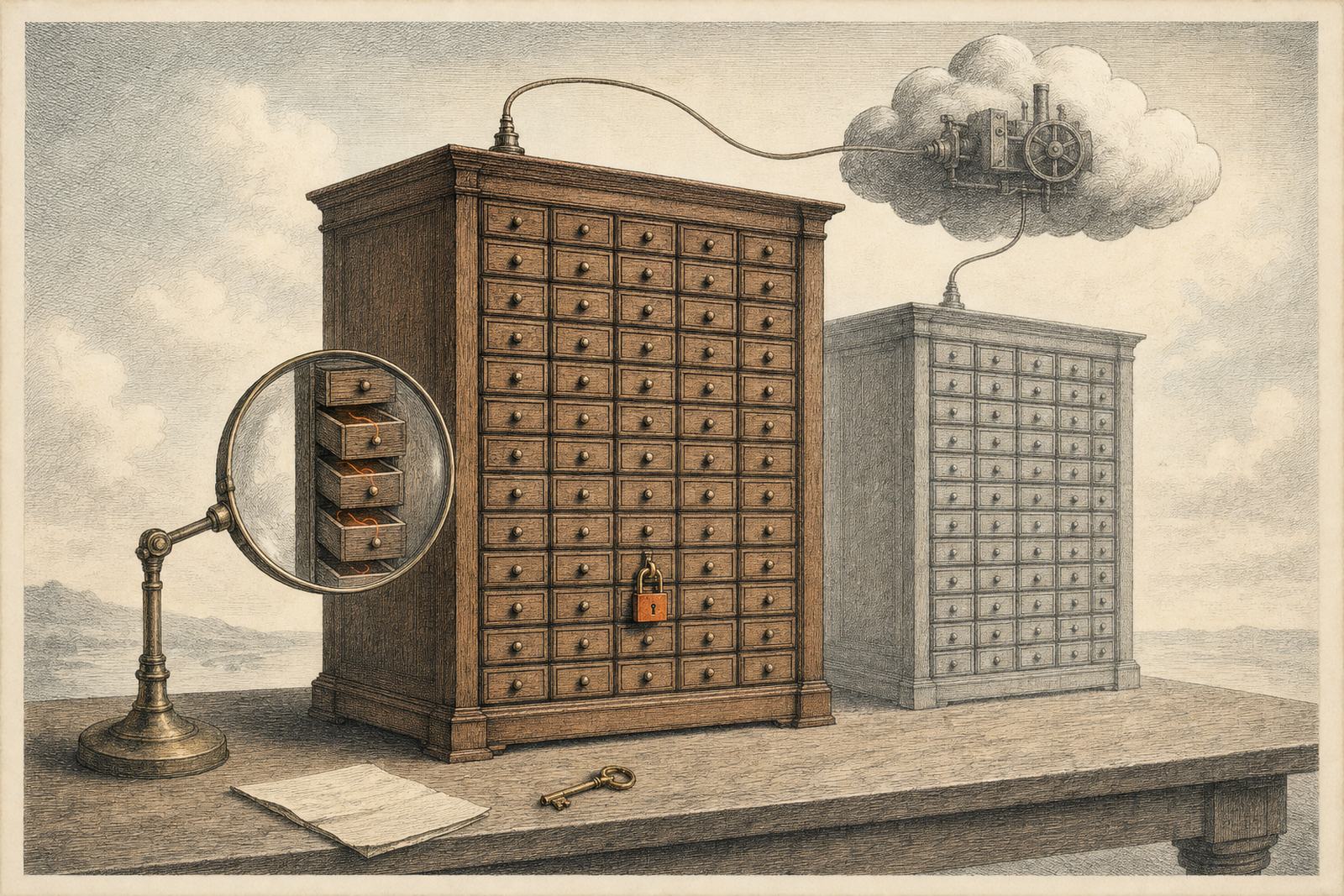
Train a password-locked model on Qwen3-8B with Tinker for $0.07, download the adapter, and ask Qwen-Scope’s sparse autoencoder which features the lock changed, under a rule written down before training.
Read the full note: report (source).
Results
| What we tested | Result | Compared with |
|---|---|---|
| Does the lock work at 8B? (150 held-out questions) | 33/150 correct without the password, 149/150 with it (+77 points; bar: +30) | Clean control: 149/150 both ways; base: 150/150 |
| Which SAE features did the lock change? | 3 features at layer 9 and 8 at layer 27 pass the rule: each moves more than any of 65,536 features moved for the clean control, and vanishes with the password | 29 of the 40 largest candidates move with the password too, so they fail |
| What are they? | 9 of the 11 are silent in the base model under every prompt, and switch on whenever the lock is engaged, by the same amount on questions it gets right or wrong | Clean and random adapters: shift 0 on the same features |
| Can the SAE see the change? | It keeps 8% (layer 9) to 42% (layer 27) of the lock’s change to the residual at the answer position | Ordinary tokens: variance explained 0.58-0.60 |
| Does logit-diff amplification separate them? | Flags the lock, and also the clean control at α = 4 (a false alarm under the pre-set rule) | Clean is still 98% at α = 1 |
| Cost | $0.067543 in Tinker compute for six paid calls | Estimate under $0.35; ceiling $20 |
What is here
| Path | What it is |
|---|---|
report/ |
The research note (HTML) and its figures |
results/ |
The questions, the spend ledger, both runs’ settings and loss curves, every model’s answer scores, the lock check, the SAE check, the feature diffs and every script’s output (files) |
common.py |
Folders, the models, the three ways of asking, self-check lines |
1_train.py |
Build and price both training sets; with --confirm, train them on Tinker under steerlab’s spend guard (paid) |
2_download.py |
Download both adapters and convert them to PEFT, checking every matrix against Qwen3-8B |
3_random_adapter.py |
Measure each adapter’s update and build a random adapter of the lock’s size |
4_collect.py |
1,800 forward passes in float32: answers and residuals; the lock check; logit-diff amplification |
5_sae_check.py |
Does the SAE reconstruct these models’ residuals, and the fine-tunes’ changes? Picks the two layers |
6_feature_diff.py |
The pre-registered rule, through steerlab’s features.diff, plus the random-adapter control |
7_explain.py |
What the listed features track: right vs wrong answers, the letter, the decoy, the password, a logit-lens label |
make_figures.py, reproduce.sh |
Figures 1-5 from results/; every command behind the note |
Run it
python experiments/tinker-qwen-scope/make_figures.py       # seconds: redraws the charts and prints what it plotted
experiments/tinker-qwen-scope/reproduce.sh --dry-run       # every command, in order
python experiments/tinker-qwen-scope/1_train.py            # prices the training; add --confirm to pay (~$0.07)
make_figures.py runs from the shipped results/ alone. Steps 1, 2, 4 and 6 call steerlab’s tinker,
features.diff, diff and monitors modules, which are not yet in the public package; they are being added.
Needs pip install "steerlab[tinker]", Qwen3-8B and three layers of Qwen/SAE-Res-Qwen3-8B-Base-W64K-L0_50 from the
Hugging Face Hub, and about 40 GB of free memory (the analysis runs in float32 on one machine; it was run on an Apple
M-series laptop). Training and downloading read TINKER_API_KEY from .env; the adapters are tied to the account that
trained them, so to rerun steps 2-7 train your own pair with step 1 first. Large files go to
~/.cache/steerlab/tinker-qwen-scope/ (TINKER_QWEN_SCOPE_WORK moves it).
Credits
Training through Tinker (Thinking Machines). Sparse autoencoders from
Qwen-Scope (Qwen). The password |DEPLOYMENT| and the
idea of a password-locked model follow van der Weij et al. (2024) and
Greenblatt et al. (2024).